

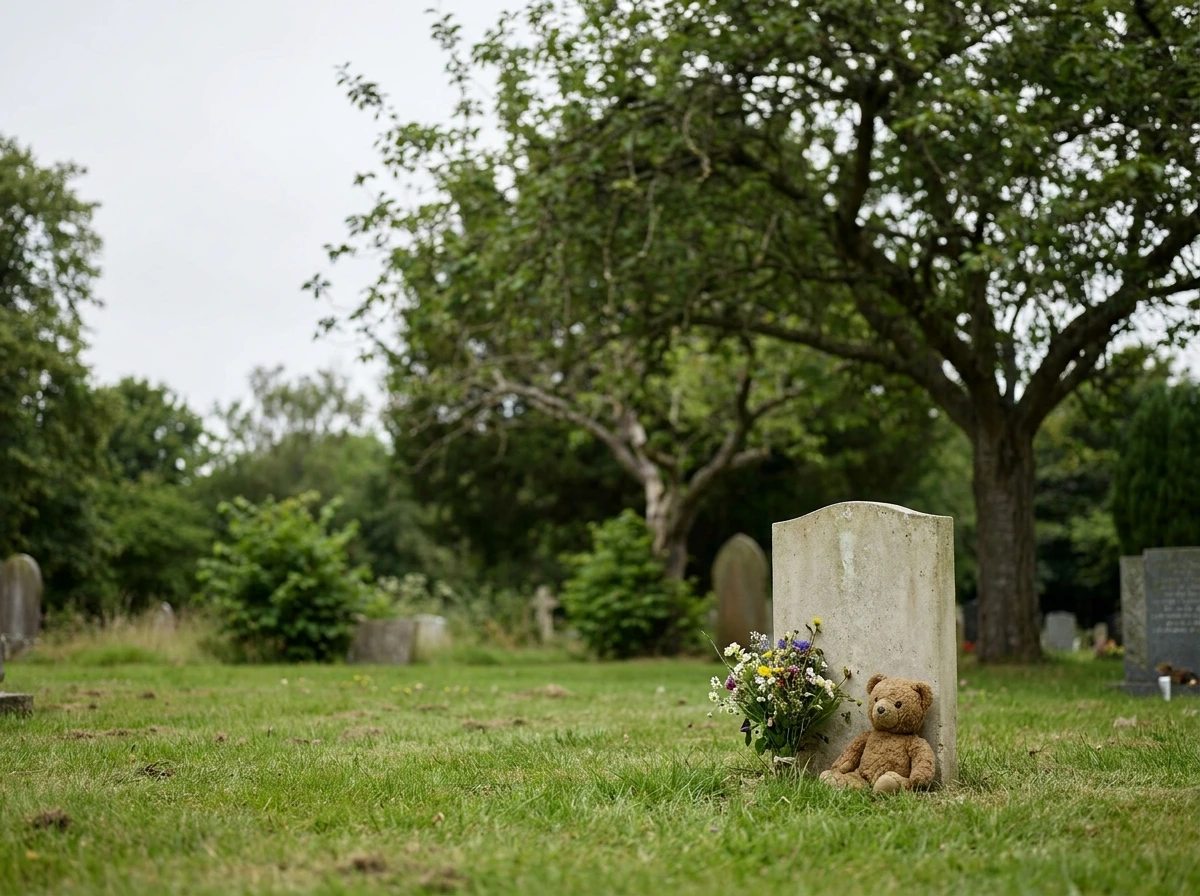
Choosing children’s headstones is something no parent or close family member should ever have to face. If you are here because you need to make this decision, the first thing to know is that you do not have to rush every choice at once.
A child’s memorial has to do several jobs gently. It needs to honour a young life, fit the cemetery or burial authority’s rules, stand well over time, and feel right to the people who will visit it. At Quince Memorials, we help families work through those decisions one step at a time, from the first plot checks to the final wording, design, and installation. If you want to see suitable styles before talking everything through, our children’s memorial options are a useful place to start.
Start With the Plot Rules Before the Design
Before looking at shapes, stone colours, or inscriptions, ask which rules apply to the grave. This is the least emotional part of choosing children’s headstones, but it can prevent painful disappointment later.
Dedicated children’s sections, family plots, churchyard graves, cremation areas, and general cemetery sections may all have different rules. The burial authority may set limits on the memorial’s height, width, material, colour, fixing method, photo plaque, vase, ornaments, and the type of wording allowed. Some places are more flexible for children’s sections. Others keep the same rules across the whole cemetery.
A good first step is to ask for the written memorial regulations for the exact plot. If the wording feels technical, bring it to a monumental mason before settling on a design. In England, the Children’s Funeral Fund can help with some funeral costs for a child under 18 or a baby stillborn after the 24th week of pregnancy, including burial or cremation fees, although it does not replace a quotation for the physical memorial itself. We can help you understand what the rules may mean in practice, but approval always depends on the cemetery, churchyard, crematorium, memorial garden, or local burial authority.
We have helped families arrange child memorials in Leighton Buzzard, and experience shows the local process can differ from nearby towns. A cemetery or churchyard may require different paperwork, design details, permissions, or approval steps, so it’s best to check with your local burial authority before treating the design as final.
Dedicated Children’s Sections and Family Plots Feel Different
The differences between dedicated children’s cemetery sections and family plots are not only administrative. They can shape the atmosphere around the grave, what other families have chosen nearby, and how personal the memorial can be.
A dedicated children’s section may allow softer motifs, smaller memorials, child-centred shapes, or more decorative features. It may also have specific rules for toys, lights, trinkets, vases, or seasonal items. A family plot can offer a different kind of continuity, especially if relatives want space for future inscriptions or a shared family memorial, but it may follow stricter rules on size, style, and wording.
There is no universally better option. The right setting depends on the burial arrangement, family wishes, and what the authority permits. If relatives have different opinions, it can help to separate the decisions: first confirm what is allowed, agree on the tone, and then choose the design. That order can keep the conversation grounded when emotions are already heavy.
We have also helped families in and around Baldock choose child memorials, where the decision was not only about the design but also about the plot type. In some cases, families need to weigh the softer setting of a dedicated children’s section against the continuity of a family plot, especially if future inscriptions, shared family wording, or a more personal child-centred design should be planned from the outset.
How Soon After Burial Should You Start Designing a Child’s Memorial?
You can start gathering thoughts whenever you feel able, but you may not be able to install a memorial straight away. Some burial authorities require a waiting period after burial so the ground can settle. Others may allow temporary markers while the permanent memorial is being planned.
This does not mean you have to design everything at once. Some families start with a few notes: a favourite phrase, a symbol, a colour, a name style, or the feeling they want the memorial to carry. Others need more time before talking about children’s headstones at all. Both responses are normal.
If you want a practical timeline, start with these stages:
- Ask the cemetery or burial authority for the plot rules
- Decide whether the memorial is for a dedicated children’s section, family plot, or another approved setting
- Gather wording, motif ideas, and family views
- Speak with a monumental mason
- Review the proposed layout, material, size, and inscription
- Submit the memorial application where required
- Wait for approval before production or installation
- Check the finished memorial after installation
That process may look simple on paper, but in real life, families often need pauses between the steps.
Choosing Symbolic Designs and Motifs
Many children’s headstones feature gentle symbols such as teddy bears, angels, stars, butterflies, hearts, clouds, flowers, and doves. Some families prefer a simple, traditional headstone with a small carved detail. Others choose a shaped memorial that feels softer and more personal.
The key point is that your design options depend on the local burial authority. A teddy bear, star, heart, photo plaque, coloured detail, or shaped stone may be allowed in one section but refused in another. Before committing to a design, check the regulations and ask whether the proposed shape needs a formal drawing or application.
If you are considering a more personal design, our guide to bespoke headstones explains how custom choices can affect cost, design, and practical planning. For children’s headstones, bespoke does not have to mean elaborate. Sometimes the most moving detail is a small carved symbol, a carefully chosen line, or a shape that feels quietly personal.
Selecting Durable Materials and Finishes
Soft, light-coloured stones can feel right for a child’s memorial. Families often ask about white marble, light grey granite, pale finishes, or polished details because they can look gentle and peaceful. However, the material still needs to suit the setting, weather, maintenance expectations, and burial authority rules.
Granite is often chosen for its durability and range of finishes. Marble can look softer, but it may weather differently over time. A polished face, honed surface, carved detail, gilded lettering, or painted inscription will each age in its own way. The best choice is not just the one that looks right on day one; it should still feel appropriate years later.
If you are balancing appearance with long-term care, this guide to memorial materials and finishes is a helpful starting point. The Ministry of Justice also highlights the importance of inspection and risk assessment for memorial stones. That is why fixing methods, material choice, and long-term stability should never be treated as afterthoughts. For children’s headstones, we usually suggest confirming the permitted materials first, then choosing the finish and lettering style from the options available for that plot.
We have helped families arrange child memorials in Shefford and choose materials and finishes before submitting a design for approval. Local requirements can shape what is practical, from the stone and finish to the fixing method and long-term maintenance expectations.
Epitaph Ideas for Baby and Child Headstones
Epitaph ideas for baby and child headstones often start with a single feeling: love, loss, tenderness, faith, hope, or a memory that belongs only to the family. The wording does not need to be long to be meaningful.
Short inscriptions can work well when space is limited:
- “Forever in our hearts”
- “Too loved to ever be forgotten”
- “Our precious son”
- “Our beautiful daughter”
- “Held for a moment, loved for a lifetime”
- “Sleep peacefully, little one”
Some families choose a nursery rhyme, a short prayer, a line from a bedtime song, or wording connected to a favourite story. Others prefer the child’s full name, dates, and one simple line of love. If future wording may be needed on a family memorial, ask about spacing early.
Lettering style also affects the feel of the memorial. Hand-cut and machine-assisted inscription methods can both be suitable, depending on the design, stone, budget, and finish. Our article explains the practical lettering differences between the two.
What to Expect When Meeting a Monumental Mason
A meeting about children’s headstones should feel calm, not rushed. You can bring partial ideas, uncertain wording, cemetery paperwork, photos of styles you like, or no design ideas at all.
A monumental mason will usually need to know where the memorial will be placed, which rules apply, the child’s name and inscription requirements, your preferred material, and any motifs or shapes you have in mind. It also helps to mention early if you want a photo plaque, vase, space for future inscriptions, or any decorative details. If you are planning double or twin children’s headstones, say this upfront, as symmetry, spacing, inscriptions, and approval rules may need extra thought.
It is also okay to say when family opinions differ. Sometimes the kindest way forward is to create two or three restrained options, then let relatives respond to something visual rather than arguing from imagination. If you are unsure what to ask, our guide to professional gravestone makers can help you prepare, and our memorial design process shows how a careful idea becomes a finished memorial.
That calm process is often what families need most. When we support families with child memorials in Stotfold, our role is to handle the practical details, including design drawings, inscription layout, material choices, and the memorial application, while giving families the space to make decisions at their own pace.
Memorial Applications, Approval, and Final Checks
A memorial application is usually a formal request to install a headstone or memorial on a specific plot. The exact process varies, but it may require grave details, memorial size, material, inscription, a design drawing, fixing details, and the monumental mason’s information.
Do not assume approval is automatic, especially for shaped children’s headstones, photo plaques, unusual colours, toys, lights, or other decorative additions. Wait for approval before treating the design as final.
After installation, check the memorial gently but carefully. Confirm the name, dates, inscription, motif, alignment, finish, and any agreed vase or plaque details. If the family plans a small unveiling or dedication, keep it simple. A few words, flowers, a quiet reading, or a private family moment can be enough.
Frequently Asked Questions
Can I choose any shape for a child’s headstone, like a teddy bear or star?
Possibly—but it depends on the rules for that cemetery, churchyard, crematorium, memorial garden, or burial authority. It’s best to ask for the plot regulations before choosing a shaped design, as children’s sections can have their own restrictions.
Are photo plaques allowed on children’s headstones?
Some burial authorities allow photo plaques, while others restrict their size, material, placement, or whether they’re permitted at all. If you want to include a photo, mention it early so it can be factored into the design and application.
What are the rules regarding toys, lights, and trinkets on a child’s grave?
Rules vary widely. Some children’s sections allow personal items, while others restrict loose objects, solar lights, glass, wind chimes, or seasonal decorations for safety and maintenance reasons. The ICCM shows that cemetery and crematorium management relies on best practice, training, and local authority procedures, rather than one national rule for every grave.
Can parents reserve space on a child’s headstone for future inscriptions?
Yes, in many designs. If you may want additional wording later, plan the layout before the first inscription is cut so the memorial does not feel cramped.
What size restrictions apply to children’s headstones?
Size restrictions depend on the plot type and burial authority. We generally recommend asking for the written regulations for the exact grave first, then checking the proposed height, width, base, and design before applying.
Speak To Us About Children’s Memorials
If you are choosing children’s headstones and feel unsure where to begin, Quince Memorials can help you take the next step gently. We have experience helping families across Leighton Buzzard, Baldock, Sandy, Shefford, Stotfold, and surrounding areas with cemetery rules, design suitability, inscriptions, applications, and installation checks. Bring the plot details, any cemetery paperwork, wording ideas, or even a rough sense of what you want the memorial to feel like.
Visit our contact page, call 01767 314419 or email sales@quincememorials.co.uk. We’ll be there to help you whenever you are ready.