

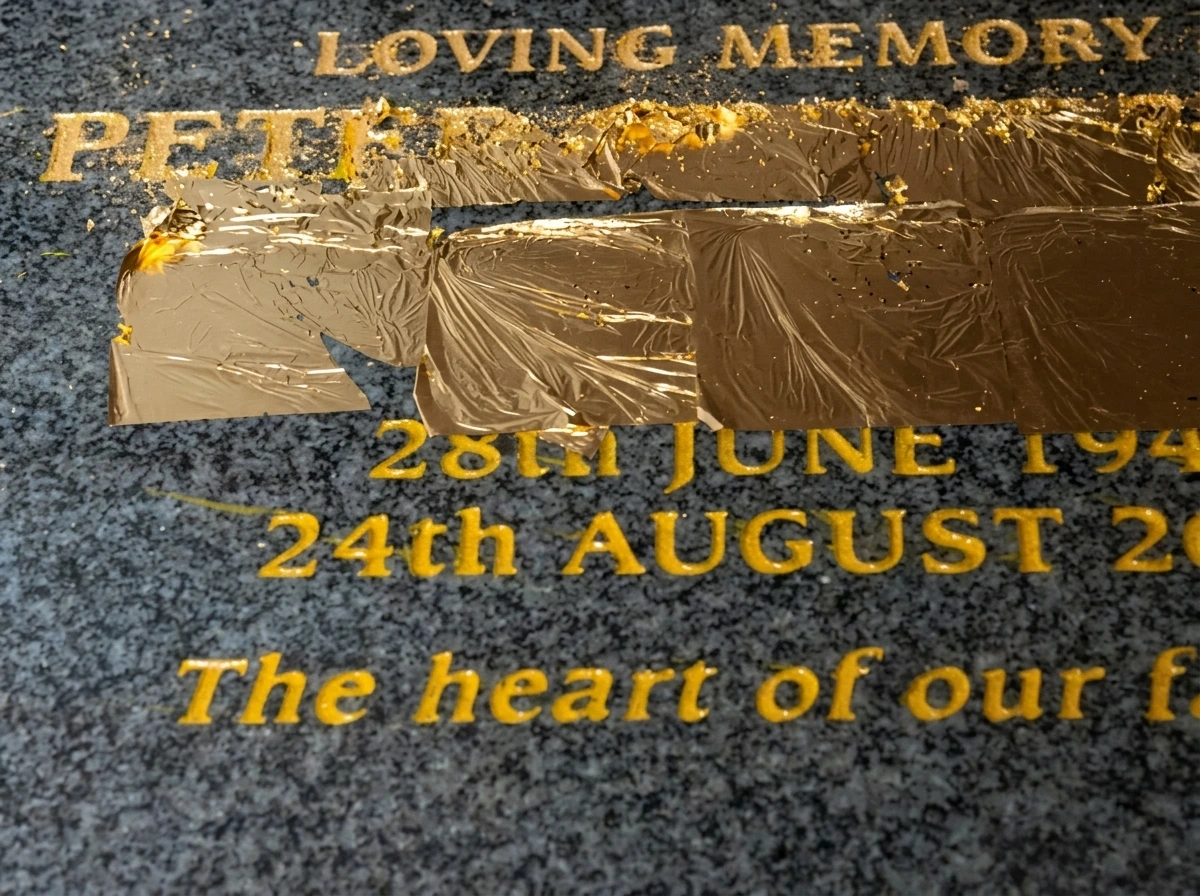
Maintaining a memorial is a profound act of remembrance that helps preserve a family’s history for future generations. However, headstones naturally face the elements over time, which can cause once-clear lettering to become faint and difficult to read. When this happens, families often need to choose between two common methods for restoring faded inscriptions: re-painting and hand-gilding.
At Quince Memorials, we believe that understanding these options can help you make an informed choice, ensuring your loved one’s tribute receives the appropriate care and finish for the stone, setting, and budget.
This guide explains what you need to know about re-painting and hand-gilding, including how stone type, local cemetery or churchyard rules, and cost can affect your decision.
The Challenge of Restoring Faded Inscriptions
Gravestones across the UK are exposed to harsh weather throughout the year. Over the decades, rain, frost, sunlight, lichen, and moss can wear away the original paint or gold leaf inside the lettering, leaving the inscription faint and faded.
Standard cleaning methods rarely resolve faded lettering. In many cases, the carved grooves need to be refilled with fresh paint or real gold leaf so the words stand out clearly against the stone. While this may sound straightforward, restoring faded inscriptions requires skill and care to avoid chipping or damaging the stone. The most suitable method will depend on the type of stone, the depth of the lettering, and the rules of the local burial ground.
If you notice that a loved one’s headstone is becoming difficult to read, asking a local, trusted stonemason to assess it is a sensible first step.
Suggested read: How to Restore Weathered Memorials to Their Former Glory
How Stone Type Affects Your Choice
When restoring faded inscriptions, it is important to remember that different stone materials respond differently to re-painting and hand-gilding. A method that works well on a smooth, hard stone may not be suitable for a softer or more porous material.
A reputable mason will usually check the material of the headstone first to make sure the chosen lettering finish is appropriate and likely to last.
Painted Lettering for Granite
Granite is a hard, smooth stone with a very low absorption rate, which means it often works well with specialist monument paints.
Re-painting is commonly recommended for restoring faded inscriptions on granite headstones, particularly because the contrast between a dark, polished background and bright silver, gold, or white paint can be sharp and easy to read.
Hand-Gilding for Marble
Marble is generally softer than granite and can be well suited to hand-gilding, as gold leaf can adhere effectively when the surface is properly prepared.
When restoring faded inscriptions on marble gravestones, a mason will usually apply a specialist adhesive to the carved letters before pressing gold leaf into the grooves. Since pure gold does not rust, it can remain bright on the stone for many years when maintained correctly.
Natural Finishes for Limestone and Yorkstone
Limestone and Yorkstone are more porous than granite and marble. This means that using thicker paints can sometimes trap moisture inside the stone, which may cause damage when the moisture freezes.
For limestone and Yorkstone memorials, the most suitable approach may be to use breathable specialist paints or to clean and sharpen the carvings so the inscription becomes more legible without compromising the stone.
Navigating Local Burial Authority Regulations
Every cemetery and churchyard has its own rules about what can and cannot be done to a gravestone. Families are often surprised to learn that they do not usually own the land the grave sits on. Instead, they typically hold the exclusive right of burial in the plot, which means any changes to the gravestone must follow local guidelines.
Lettering Rules for UK Churchyards
Churchyards often have traditional rules intended to preserve their peaceful and natural appearance. Highly reflective or overly bright finishes may not be permitted.
It is worth keeping these points in mind:
- Shiny or bright gold paint may be restricted in traditional churchyards
- High-gloss gold leaf may require written permission from the church diocese
- Soft white, grey, or matt black paints are often preferred for limestone and sandstone
- The font style may need to match traditional lettering shapes
- Bright or modern paint colours may be rejected to protect the historic appearance of the churchyard
Permitted Dimensions in Municipal Cemeteries
Cemeteries run by local councils are often more flexible, although they can still have strict rules about headstone sizes, materials, and safety.
If a stone needs to be taken to a workshop to be re-lettered, it may need to pass modern stability tests before it can be reinstalled. Working with an experienced monumental mason who understands this process can help ensure the work is completed safely and correctly.
Managing the Official Process
To update a gravestone, you will usually need to submit a formal application to the local burial authority. The paperwork typically needs to explain the proposed materials, lettering finish, and any safety fixings or anchors. It must also usually be signed by the registered owner of the grave rights or by an authorised relative maintaining the plot.
The paperwork can be confusing, as the process varies between churchyards and municipal cemeteries. Working with local professional masons who are familiar with these requirements can help ensure everything is compliant before any work begins.
Suggested read: How to Update Memorials with Additional Inscriptions
Comparing Costs
When comparing the cost of re-painting and hand-gilding, it helps to consider both the upfront price and how long each finish is likely to last.
Re-painting is usually cheaper upfront, making it a practical choice if you want to make the words readable again as quickly as possible. However, even high-quality paints can gradually fade under sun and rain, so the stone may need a touch-up every three to five years.
Hand-gilding usually costs more at the start because the material is more expensive and applying it by hand takes time and care. However, it can offer strong long-term value. Gold leaf does not rust or decay, and a gilded inscription can often remain bright and easy to read for many years before needing further attention.
Why Families Trust Quince Memorials
Quince Memorials has been helping families across Bedfordshire, Buckinghamshire, Cambridgeshire, Hertfordshire, and beyond for over 50 years. When restoring faded inscriptions, we treat every project with the care and respect it deserves.
- Comprehensive customisation options: As specialists, we understand the properties of different stone types and can offer guidance on suitable materials and finishes based on your wishes, setting, and budget
- Expert craftsmanship: We aim to finish every piece to a high standard, creating a clean, polished result while protecting the integrity of the material
- Legal compliance: We carry out our work with local churchyard and cemetery requirements in mind, helping ensure your tribute meets relevant burial authority standards
- Industry accreditation: We are fully accredited with the British Register of Accredited Memorial Masons (BRAMM), which means our work follows recognised UK safety standards
- A commitment to longevity: Our goal is to provide a service that helps your tribute remain a stable, legible, and meaningful memorial for years to come
Frequently Asked Questions (FAQs)
How much does it cost to re-gild a headstone in the UK?
The price depends on how many letters are on the stone and how worn the carvings are. The cost also reflects the gold material, preparation work, and labour required to complete the re-gilding properly.
Is permission needed for restoring faded inscriptions?
Yes. You will usually need permission from the local council or churchyard authority before carrying out cleaning, painting, or repair work on a gravestone. You, or your mason acting on your behalf, must submit an application to make sure the work follows the relevant rules and standards.
Which option lasts longer, re-painting or gilding?
Gold leaf generally lasts longer than paint, often staying bright and clear for 10 to 20 years when applied and maintained correctly. Painted lettering is usually more budget-friendly, but it is more vulnerable to weathering and may need to be refreshed by a professional every three to five years.
Get Expert Advice Today
At Quince Memorials, we understand that keeping a gravestone clear and legible helps preserve precious family memories for the future. If you are unsure about the process of restoring faded inscriptions or which option is best for your headstone, please get in touch.
For more information, call 01767 314419 or email sales@quincememorials.co.uk. Our experienced team is here to help whenever you are ready.