

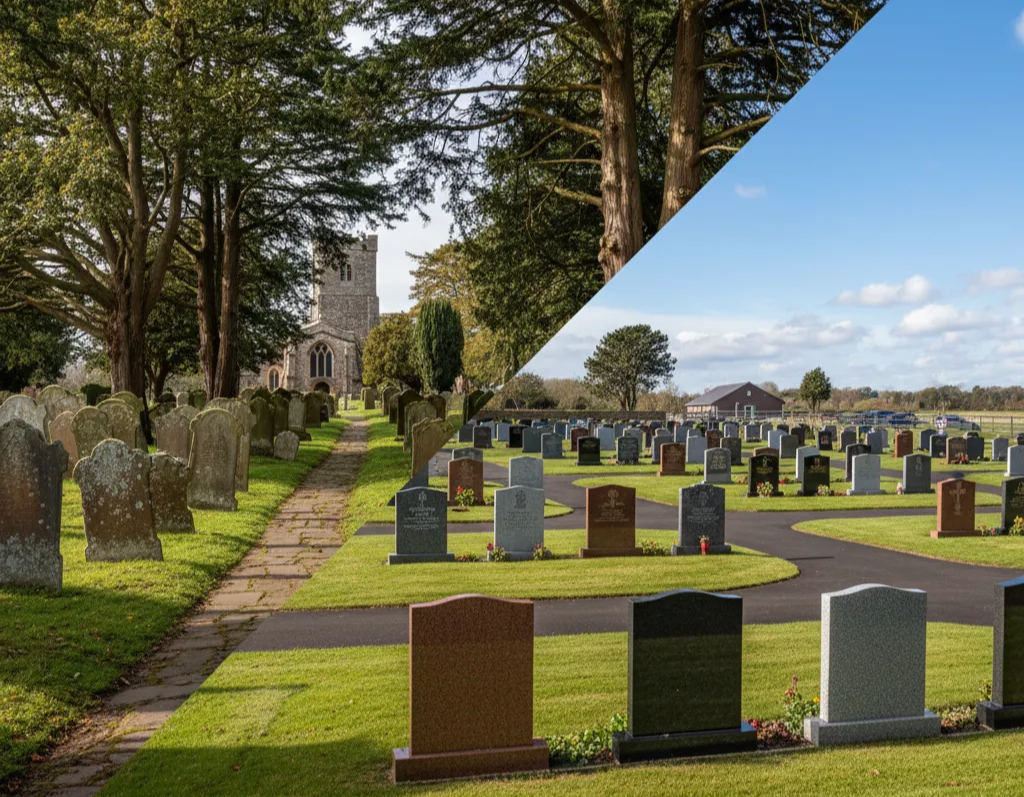
When a loved one is laid to rest, the memorial chosen becomes more than stone and inscription: it becomes a place of remembrance, a quiet marker for reflection, and a connection between the past and present. At Quince Memorials, we understand how important it is for families to make an informed and meaningful choice. One of the questions we encounter frequently is: What is the difference between churchyard vs cemetery memorials?
While the two are sometimes used interchangeably in casual conversation, there are subtle but important distinctions which can influence design, permissions, and maintenance. This blog explores those differences with compassion and clarity.
Understanding the Settings
A churchyard typically refers to land surrounding a church, often part of a parish ground, and is commonly older in its usage. It may have historical gravestones, age-old trees and a particular atmosphere of continuity with the community.
A cemetery, in contrast, is a designated burial ground which may be separate from any church, often laid out in more modern times, and sometimes managed by a local authority or a company.
Thus, when we speak of churchyard vs cemetery memorials, we are talking not just about the memorial itself but the setting in which it sits—and that setting will affect what families should know.
Regulation and Permissions
In a churchyard, memorials are often subject to specific regulations set by the ecclesiastical authority or by the church’s own trustees. With historic grounds, conservation concerns may apply. Permissions might be required for the size, material, or fixing of new memorial stones. In a cemetery setting, rules will be set by the burial authority or the cemetery operator: these might involve fixed-size regulations, the type of stone permitted, or what lettering is allowed. Families comparing churchyard vs cemetery memorials should therefore understand that the administrative process may differ.
At Quince Memorials, we assist clients with understanding local authority requirements for churchyard vs cemetery memorials, ensuring every design submitted is compliant with both the setting and regulations.
Design and Materials
When selecting a memorial, the setting influences the appropriate choice of materials and design. In an older churchyard, you may find existing memorials in sandstone, limestone, or other softer stone, with traditional styles, weathered patina and conservative lettering. A new memorial in that setting may need to be sympathetic in size, style and colour so it blends harmoniously.
In a cemetery, especially a more modern one, families might have more flexibility: granite, polished finishes, and contemporary shapes can be employed. This difference is central when comparing churchyard vs cemetery memorials.
At Quince Memorials, we offer a wide range of materials and encourage families to visit their chosen site to assess what suits the regulations and standards for churchyard vs cemetery memorials.
Longevity and Upkeep
Memorials in a churchyard may face environmental challenges: close trees, roots, and older ground conditions, as well as higher lichen or moss growth. The style of inscription may lean towards more traditional hand-carved lettering, which ages gracefully. In a cemetery environment, memorials are often on open ground, with perhaps more modern maintenance regimes, which may influence the choice of finish (for instance, polished granite might deter unwanted growth).
In comparing churchyard vs cemetery memorials, it is worth thinking about long-term upkeep: will the stone stand the test of time in that particular environment? Will cleaning or additional inscriptions be straightforward? Quince Memorials provides renovation and inscription services precisely to support families as needs change over time.
Suggested read: Restoring Memories: Our Memorial Renovation Services
Scope for Personalisation
Whether in a churchyard or a cemetery, families will often wish to personalise the memorial. However, some settings may have tighter rules on what is acceptable in terms of imagery, symbols, size or colour. In historic churchyards, the setting may favour a more understated design, while newer cemetery plots may allow more freedom. So when thinking about churchyard vs cemetery memorials, it helps to ask: “What is permitted here?” and “What will feel right in this space over decades?” At Quince Memorials, we work with families to balance meaningful personal touches with the setting’s guidelines.
Emotional and Communal Context
Beyond practicalities, the choice between churchyard and cemetery affects the emotional environment. A churchyard often carries the sense of continuity: generations of one family may lie together, and the same trees and hedges may have stood for years. The memorial becomes part of a living church community.
In a cemetery, the setting might feel more planned, sometimes more neutral, sometimes more visually open. When selecting churchyard vs cemetery memorials, it is worth reflecting on how and when you plan to visit: for a family, will the surroundings feel comforting, accessible, appropriate for a ceremony or quiet reflection?
Practical Checklist: What to Ask
For families making decisions, here is a quick checklist to guide you when comparing churchyard vs cemetery memorials:
- What material and size restrictions apply in this setting?
- Is the layout or orientation prescribed?
- Are there rules about inscription style or additional items (vases, plaques)?
- What will the maintenance expectations be over the decades?
- Will the design look in harmony with the surrounding memorials?
- How easily can we add additional inscriptions later?
- Will visitors find this place welcoming, peaceful and accessible for reflection?
Suggested read: A Fitting Tribute: Finding the Right Family-Owned Memorial Masons in Buckinghamshire
FAQs: Queries on Churchyard vs Cemetery Memorials
Are there cost differences between a churchyard memorial and a cemetery memorial?
Typically, the cost is influenced more by size, material, design complexity and permissions rather than the type of setting alone. However, historic churchyards may require additional consent or specialist installation methods, which could affect cost. It is wise to ask your supplier and burial authority for a full breakdown.
Can I add an inscription later?
Yes, most memorials allow for additional inscriptions, provided permissions are maintained. Whether in a churchyard or cemetery, contact your memorial mason to check what additions are feasible and what costs may apply.
How do I choose between a churchyard and a cemetery setting for the memorial?
Consider accessibility (for visitors), the style of surroundings, the regulations in place, and long-term maintenance. Speak with your burial authority and memorial mason to view existing memorials in both settings, so you can see what feels right for you and your loved one.
Churchyard or Cemetery Memorials? Trust Quince Memorials!
Choosing a memorial is an act of love and remembrance. When families consider churchyard vs cemetery memorials, the differences may be subtle but meaningful. By understanding the setting, the rules, the materials and the emotional context, you can make a choice that honours your loved one with dignity, beauty and lasting presence.
If you have any questions, our team at Quince Memorials would be honoured to assist you. Contact us now by calling 01767 314419 or emailing sales@quincememorials.co.uk.