

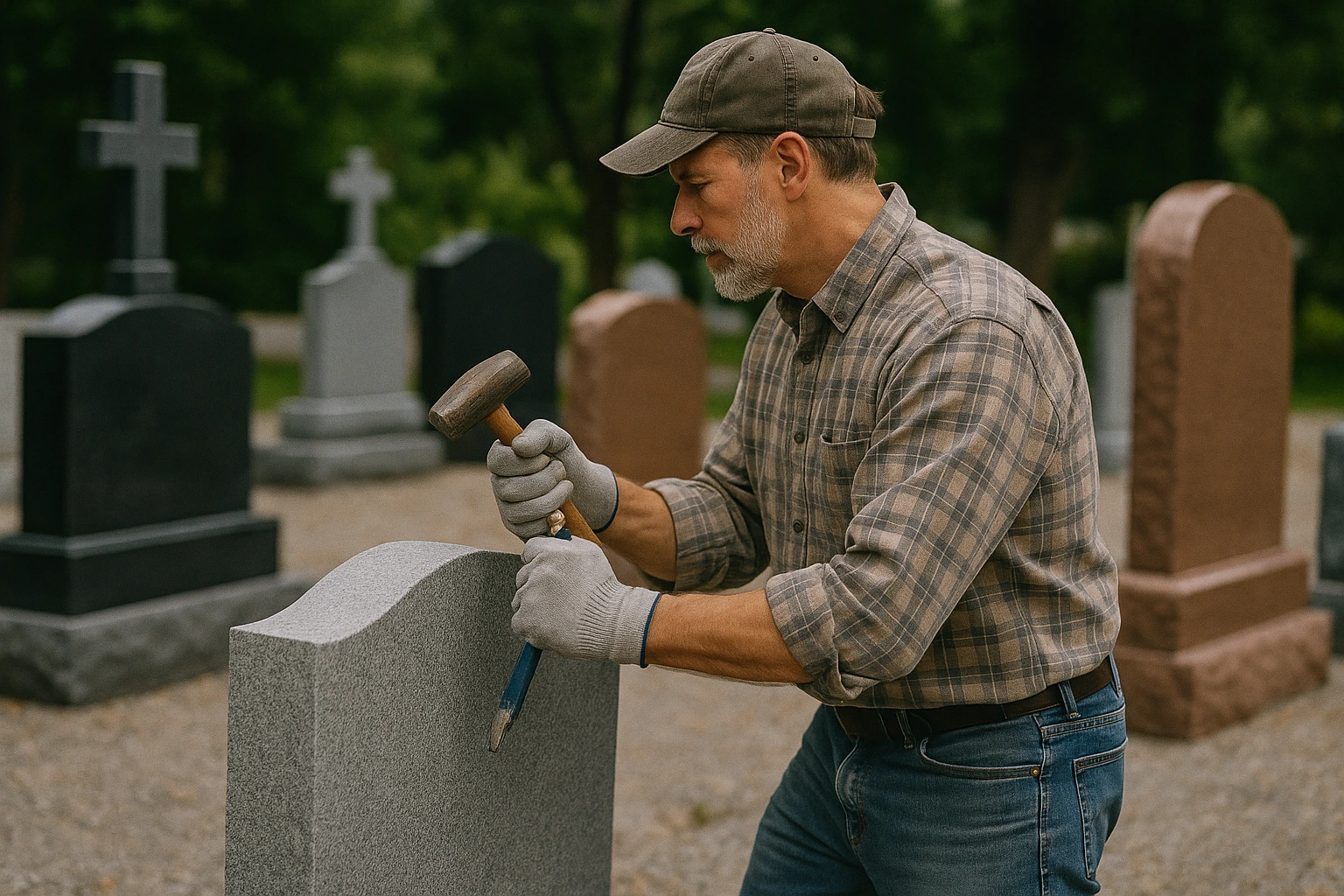
Granite and marble are two materials we come across in all kinds of places: from kitchen worktops to memorial headstones. And if you have ever looked into having something made from either, you have probably seen the term “granite and marble fabricators” pop up.
But what does that actually mean? And does it matter whether someone specialises in granite or marble, or both?
At Quince Memorials, we have been working with natural stone for years, mostly for memorials but also for other things like plaques and bespoke stonework. We thought it might help to break down exactly what granite and marble fabricators do, how the materials differ, and why choosing the right people to handle them can make such a difference.
What Does a Stone Fabricator Actually Do?
Put simply, a fabricator is the person (or team) who takes a raw slab of stone and turns it into something finished. Whether that is a headstone, kitchen counter, tabletop or memorial plaque, it all starts with a large, rough-looking slab of rock.
The fabricator is the one who measures it up, cuts it down, shapes it, polishes it, engraves it if needed, and finally installs it where it is meant to go.
Granite and marble fabricators do a hands-on, skilled job: part craftsmanship, part engineering. And when you are dealing with something as permanent as a memorial or as hard-wearing as a worktop, getting it right really matters.
Granite and Marble Fabricators: Same Skills, Different Approach
A lot of workshops, including ours, work with both granite and marble. But here is the thing: granite and marble fabricators know the two stones may look similar but behave very differently.
Granite is a tough, solid material. Marble is softer and a bit more delicate. So while the job title is the same—fabricator—working with one is not quite the same as working with the other.
If you have ever seen someone trying to cut granite with the wrong tools, you will know what we mean. Granite and marble fabricators use specialist equipment. This is not something you can tackle with a basic kit.
Working with Granite: What Fabricators Deal With
Granite is famously hard-wearing. That is what makes it brilliant for kitchen counters, gravestones, or anything that needs to last a long time. But it also means fabricators need the right equipment and experience to handle it properly.
Here are a few things that stand out:
- Cutting granite needs serious kit – You are looking at diamond saws and water jet cutters rather than regular stone tools.
- Polishing takes time – That smooth, glossy finish you see on granite? It does not happen overnight. Fabricators have to work through several stages to get that polished look.
- Joining pieces together is fiddly – Especially with worktops or multi-part memorials, getting invisible joins that stay strong takes proper care.
Working with Marble: A Different Skillset
Marble might seem similar at first glance, but it behaves quite differently in the workshop. It is softer and more prone to things like scratches or chips, so fabricators have to approach it more carefully.
- It needs a gentler touch – You cannot go at marble with the same force as granite. The tools have to be adapted, and so does the technique.
- Finishing is about finesse – Often, marble is left with a softer, honed finish rather than a super-glossy one. Getting that balance right is all part of the job.
- The patterns matter – Marble’s veining is a big part of its appeal. Fabricators take care to position cuts and joins in ways that show it off properly.
Why It Matters for Memorials
When families come to us looking for a headstone or plaque, the conversation often starts with the question of granite or marble: something granite and marble fabricators are well-placed to guide you through.
Both have their place, but they are suited to slightly different things.
- Granite memorials tend to last longer, especially outdoors. They handle weather and moss better, which is why you will see them in many modern cemeteries.
- Marble memorials have that classic, softer look. You see them more in older graveyards and churchyards. But they do wear down a bit faster over time.
Whatever you choose, having experienced granite and marble fabricators matters. A memorial should last for decades, and that comes down to quality materials and expert craftsmanship.
What Makes a Good Fabricator?
If you are thinking about having something made from granite or marble, whether it is a memorial or something else, here are a few things we reckon are worth keeping in mind when choosing granite and marble fabricators to work with:
- Experience with both materials – Not everyone does both well. It is worth checking.
- Their own workshop – Some places just take your order and send it off somewhere else. We prefer doing everything in-house so we can keep an eye on the quality.
- Attention to the details – Things like vein direction, finish options, and engraving quality all make a difference in the finished piece.
- Previous work you can see – Always ask to see examples. Photos help, but in-person is even better if you can visit.
- Understanding local rules – Especially for memorials, there are sometimes restrictions on stone types or sizes. Local granite and marble fabricators tend to know the ins and outs.
Fabricators vs Installers: Who Does What?
This catches a few people out.
- Fabricators cut and finish the stone.
- Installers put it in place.
Some companies do both, like we do at Quince Memorials. Others just handle the fabrication and leave the installation to someone else. It is worth checking with your granite and marble fabricators so you know who is doing which part of the job.
Granite or Marble? A Quick Recap
For anyone wondering which is the better choice, here is a simple side-by-side:
| Granite | Marble |
|---|---|
| Very hard and durable | Softer, more delicate |
| Good for outdoor memorials | Suited to indoor or sheltered places |
| Glossy, speckled appearance | Soft veining, classic look |
| Needs specialist cutting tools | Easier to cut, but needs care |
It really depends on what you are after from your granite and marble fabricators: something solid and long-lasting, or something with a softer, more traditional look.
Suggested read: The Art of Memorial Stone Engraving: Techniques and Trends
FAQs: A Few Things People Often Ask About Granite and Marble
What are the differences between granite and marble?
They differ in texture: granite is very hard and more durable, while marble is softer and more delicate. For memorials, granite is usually preferred for outdoor material while marble is often used in indoor or sheltered areas.
Can a fabricator help me choose between granite and marble?
Yes, absolutely. That is part of the job. As experienced granite and marble fabricators, we are always happy to talk through what might work best for you.
Is granite always more expensive than marble?
Not always. Some rare marbles cost more than basic granite. It depends on the type, the source, and the finish.
How long does it take to make something?
That varies. A simple plaque might be ready in a few weeks. A bigger, more complicated memorial could take longer.
Can I visit the workshop to see the stone first?
Yes, and we encourage it. It is always good to see things in person before making a final decision.
Final Thoughts: Same But Different
At the end of the day, granite and marble fabricators are there to help turn a raw bit of natural stone into something meaningful, whether that is a headstone, a worktop, or a decorative feature.
Understanding the difference between granite and marble helps you make a clearer choice. But understanding the difference between fabricators is just as important.
At Quince Memorials, we take pride in doing both materials justice. We handle everything ourselves, from selecting the slab to final installation. If you are thinking about having something made or just want to chat through options, feel free to get in touch. Call us at 01767 314419 or send us a message at sales@quincememorials.co.uk.