

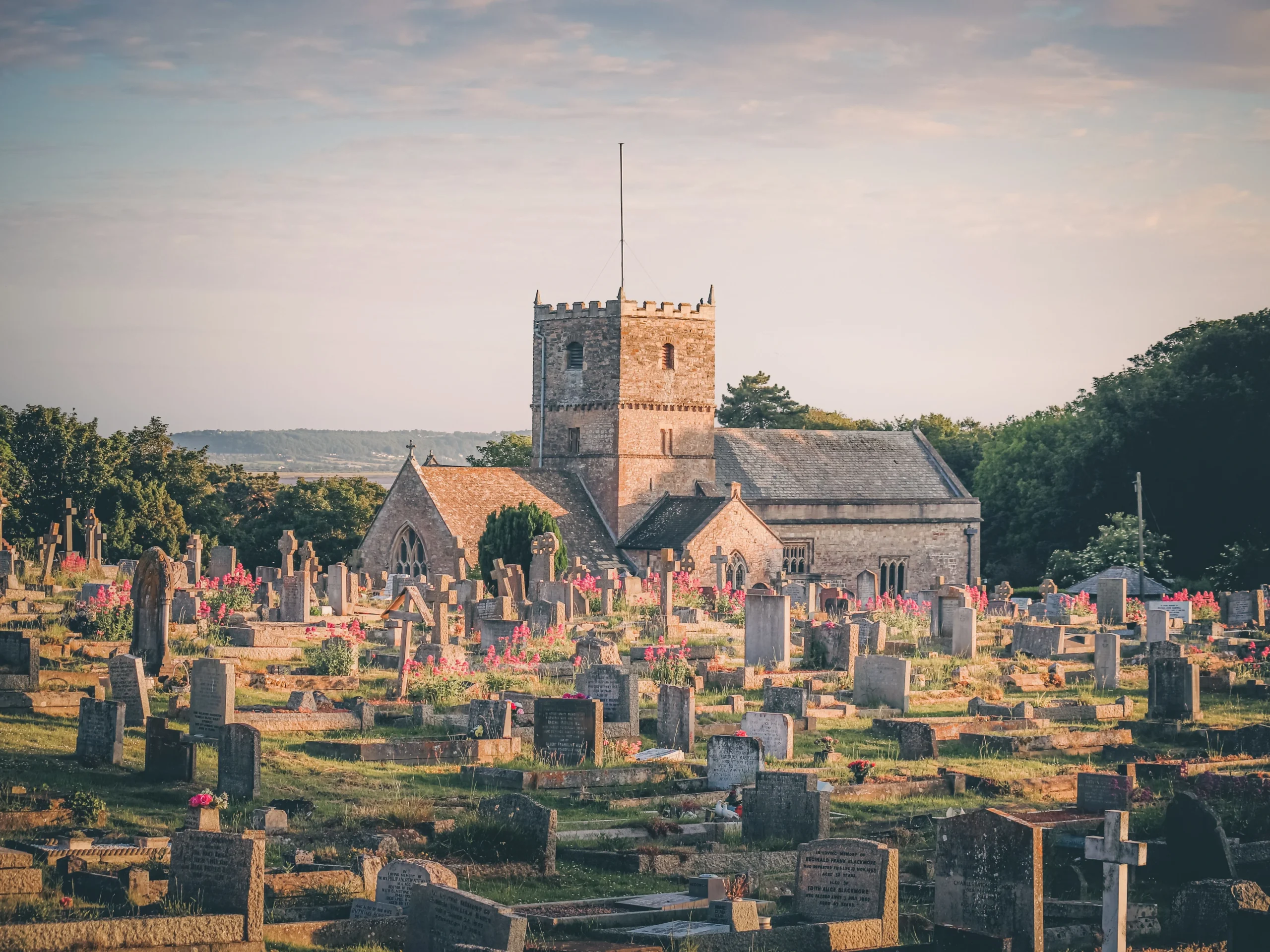
Choosing churchyard headstones can feel a bit more involved than choosing a memorial for a municipal cemetery. A churchyard is usually governed by parish and diocesan rules, so the stone, finish, inscription, colour, and overall character of the memorial may need approval before anything is made. That can feel like a lot when you are already dealing with grief and family decisions.
A good way to approach it is to think of the memorial as both a personal tribute and part of a shared historic setting. The Church of England puts it plainly: a memorial is a private commemoration in a public location, so the design needs to take the churchyard’s setting into account. Churchyard memorials can also fall under the Church of England faculty system, so the exact route for approval depends on the local rules and diocesan regulations.
At Quince Memorials, we help families work through these choices before they commit to a stone or finish. Local rules can differ, so this guide is not a substitute for the regulations in your specific parish. It is a practical starting point for understanding what is commonly accepted, what often causes problems, and why it helps to get advice early.
Why Churchyard Headstones Have Stricter Rules
Churchyards are different from many municipal cemeteries because they are usually attached to a parish church and often form part of a much older landscape. That setting matters. A headstone that looks normal in a modern cemetery can look too bright, reflective, or dominant in a rural churchyard.
The aim is not usually to stop families from creating a personal memorial. It is to make sure new memorials sit comfortably within the character of the churchyard, especially where older stones, grassed areas and historic buildings are close together.
That is why many churchyard rules focus on four things:
- The type of material
- The surface finish
- The inscription style
- The overall scale and visual impact
If you are comparing churchyard and cemetery rules, the biggest difference is usually the level of control. Municipal cemeteries have their own regulations, but churchyard headstones often need to meet a more traditional visual standard.
What Is the Purpose of a Memorial?
A memorial gives a family somewhere fixed, personal and lasting to remember someone. It marks the grave, carries the person’s name and dates, and often says something simple about who they were to the people who loved them.
In a churchyard, that purpose has another layer. The memorial also becomes part of a shared place of remembrance. It sits beside other graves, the church building, trees, paths and older stones. Good churchyard headstones respect both sides of that role: the family’s grief and the character of the place.
That is why the best design is rarely the loudest one. A quiet stone, carefully chosen lettering and a simple inscription can carry more weight than a glossy or heavily decorated memorial that risks being refused.
Permitted Natural Stones for Churchyard Headstones
Most churchyard regulations favour natural stone. The exact list varies by diocese and parish, but traditional materials are often preferred because they weather more gently and sit better in older churchyard settings.
A useful way to compare stones is to consider durability, porosity, colour, finish, and how likely each option is to be approved. No stone should be treated as automatically approved, but these are the materials families are most likely to hear about when discussing traditional churchyard headstones.
Nabresina
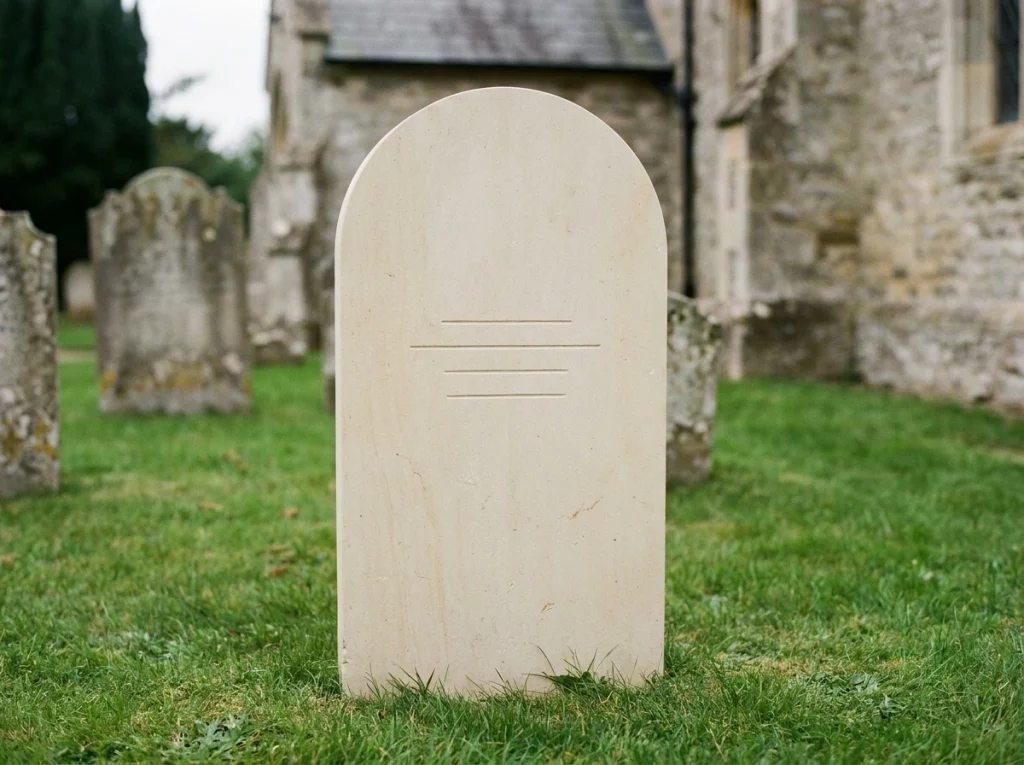
Nabresina is a pale limestone often used for traditional memorials. It has a soft, warm appearance that can sit comfortably in a churchyard, especially where bright or dark stones would feel too strong.
The trade-off is that limestone is more porous than granite. In damp or exposed churchyards, it may weather, mark, or soften over time, though that is not always a problem. For some families, gentle weathering is part of the character of a traditional memorial. The key question is whether that look suits your expectations and the local rules.
Yorkstone

Yorkstone is a sandstone with a natural, warm colour. It works well where the churchyard has an older rural character because it does not look glossy or overly modern.
It can darken and weather over time, particularly in damp conditions. If you want a crisp, clean appearance for as long as possible, you will need to weigh that against its traditional character. For some churchyard headstones, how well the stone fits the setting matters more than keeping it looking new.
Portland Stone

Portland stone has a long association with British memorials and public architecture. It is pale, understated and usually suitable where a softer traditional appearance is wanted.
Like other limestones, it needs realistic expectations; it can weather and change as it is exposed to the elements. If you want a stone that feels dignified without looking severe, Portland stone is worth discussing with a memorial mason and the relevant church authority.
Grey Granite

Grey granite is harder and often requires less maintenance than many softer stones, making it a practical choice when durability matters, especially in damp conditions.
The main caution is the finish. Churchyards may object to granite that is dark, highly polished or reflective. Honed grey granite can be much more suitable than mirror-polished black granite, but you should still check local regulations before ordering.
Welsh Slate
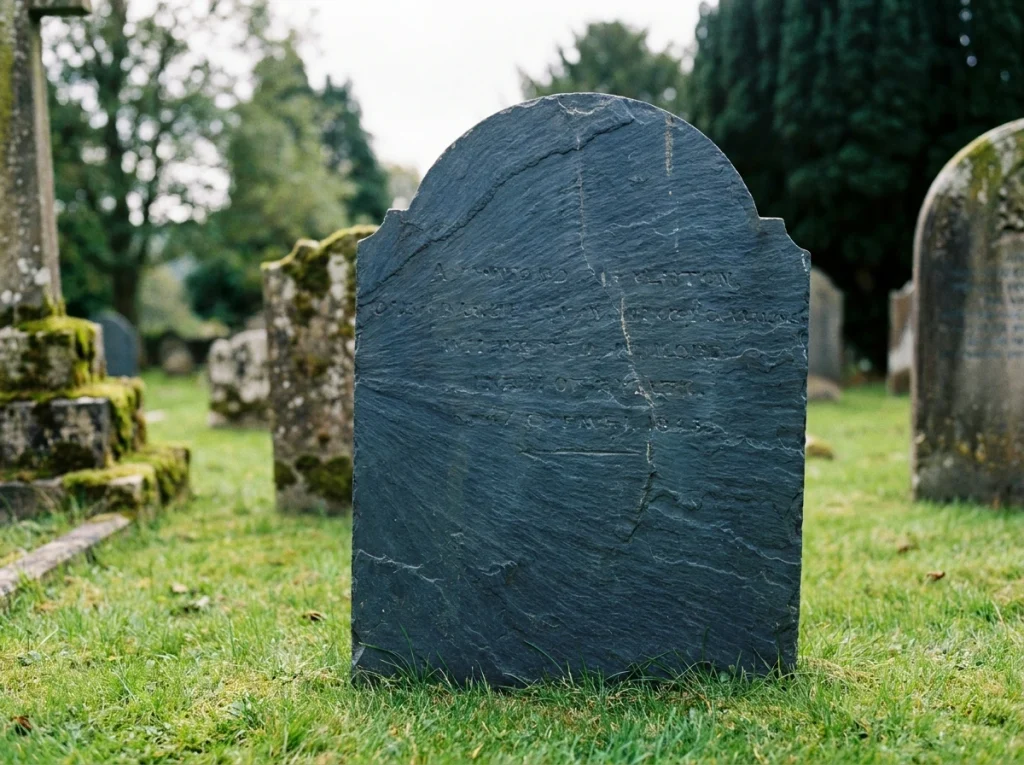
Welsh slate is fine-grained, traditional, and well suited to crisp lettering. It can work well in churchyards where darker natural stones are permitted, especially with a restrained finish.
It has a different character from limestone or sandstone and can feel more formal and precise. Depending on the churchyard, that may be a strength or a drawback. As always, approval depends on the specific local rules.
Best Low-Maintenance Stone For Damp Rural Churchyards
If low maintenance is your main priority, grey granite and Welsh slate are often the first stones to consider. They are generally less porous than limestone and sandstone, so they tend to hold detail and resist weathering better.
That does not mean they are automatically the best choice for every churchyard. In a damp rural setting, a stone that blends into older surroundings may be preferred, even if it will weather more visibly. A pale limestone or sandstone can look right in a traditional churchyard, while a harder stone may need a carefully controlled finish and colour to avoid looking too modern.
The practical selection framework is simple:
- Choose granite or slate if durability and low maintenance matter most
- Choose limestone or sandstone if traditional softness and visual harmony matter more
- Avoid choosing any material before checking the churchyard rules
- Treat polish, colour and lettering as part of the same decision, not an afterthought
This is where traditional churchyard headstones need careful judgement. The right stone is the one that suits the family, the grave, the churchyard and the approval process.
Honed vs Mirror-Polished Finishes
Surface finish is one of the easiest areas to make an expensive mistake.
A honed finish is smooth but matte. It lacks the mirror-like shine of polished stone, so it usually feels quieter and less intrusive. In churchyard settings, that restraint often matters.
A mirror-polished finish reflects light. On dark granite, it can look especially glossy and modern. Many churchyard regulations restrict or discourage highly polished stones because they can stand out against older, softer memorials.
The Church of England does not provide a single national list of permitted finishes for every churchyard. Instead, diocesan and local regulations set the details. Some dioceses are more permissive than others, and individual churchyards may have their own established patterns of accepted materials. That is why it is better to ask first than to order a polished stone and discover later that it may not be accepted.
Stone, Lettering and Colour
The lettering needs to work with both the stone and the churchyard setting.
Black lettering on pale stone can look clear and dignified. Soft white or grey lettering can work well on darker stones where a gentler contrast is needed. The point is to keep it legible.
Gold lettering is where families need to be careful. In some settings it may be allowed, but it can be restricted in many traditional churchyards because it looks too bright or reflective. The same applies to silver, bright colours, plastic lettering, or anything else that feels out of character.
A good rule of thumb is to keep the whole design quiet:
- Pale stones usually suit grey, black, or soft, muted lettering
- Darker stones may suit soft white or light grey lettering
- Reflective finishes and bright infills carry a higher approval risk
- The inscription should feel simple, reverent, and easy to read
For families who are unsure how much wording to include, our guide to choosing the perfect memorial can help you think about tone before you settle on the final inscription.
Types of Old Gravestones and What They Teach Us
Old churchyards show what tends to age well. You will often see upright headstones in limestone, sandstone, or slate. Some have softened edges, lichen, weathered lettering, or a slight lean caused by age and ground movement.
You may also see table tombs, ledger stones, crosses, and smaller markers, though not every type will be allowed for a new grave today. Older gravestones can make a churchyard feel varied, but modern rules are often stricter because parishes need to maintain the space safely and consistently.
You do not have to copy the oldest or most unusual stone in the churchyard. A design that was accepted generations ago may not be approved now. The better lesson is visual: churchyard headstones usually work best when they feel settled, natural, and proportionate.
Is Granite The Same As Marble?
Granite and marble are not the same stone.
Granite is an igneous rock. It is hard, durable, and often used for memorials, especially where long-term wear is a concern. Marble is a metamorphic stone, often lighter and softer in appearance, but it can weather differently and may be less suitable in some churchyard settings.
The confusion usually comes from appearance. Both can be polished, used for memorials in some settings, and look formal. In churchyards, however, the issue is not only the stone type; it is also the colour, finish, reflectiveness, and the rules of your local burial authority.
For example, a honed grey granite may be acceptable where a highly polished black granite is not. White marble may be restricted in many churchyards because it can look too bright or out of keeping. Always check the specific churchyard rules before deciding.
How Long After Burial Can You Put A Headstone?
The rules vary. Timing depends on the churchyard or cemetery regulations, the grave conditions, the soil, the weather, the type of burial, and your memorial mason’s advice.
Families are often advised to allow time for the ground to settle before installing a full headstone. This waiting period helps reduce the risk of movement and future issues. Check the exact timing with the burial authority and the mason handling the work.
If several relatives need to agree on the inscription, use that waiting time well. Wording changes can delay a memorial just as much as permissions or production.
How Long Does It Take to Make a Gravestone?
The timeframe depends on the stone, design, inscription, any artwork, the finish, and whether permissions are already in place. A simple memorial is usually quicker than a bespoke design with detailed carving or multiple rounds of wording changes.
For churchyard headstones, the approval stage is often just as important as the workshop stage. If the design needs adjusting because the stone, finish, or lettering does not meet local rules, the overall process can take longer.
The safest order is:
- Confirm the churchyard rules
- Choose a suitable stone and finish
- Agree the inscription and layout
- Submit the design for the necessary approval
- Begin production once the design is clear and acceptable
That order may feel slower at the start, but it can prevent costly changes later. If you are unsure where to begin, it is worth reviewing the custom headstone design process or speaking with professional gravestone makers before you make a final decision.
How are Gravestones Installed?
Gravestone installation is specialist work. The mason needs to consider the memorial type, the ground conditions, the foundation or fixing method, the grave position, safety requirements, and the burial authority’s rules.
For churchyard headstones, installation is not simply a delivery job. The memorial must be made, approved, and fixed in a way that suits the setting. Burial ground memorials need a sensible, proportionate approach to managing stability and safety, and the NAMM Code of Working Practice gives memorial masons detailed fixing guidance linked to BS 8415.
That is one reason families should avoid buying a stone without checking who will install it and what the local rules require. A memorial can look right on paper but still need proper fixing, safe access, and permission before it can be placed.
Restoring or Re-Lettering an Existing Churchyard Memorial
Older churchyard headstones may need cleaning, re-lettering, repair or replacement. The right option depends on the condition of the stone, the type of lettering, the level of weathering and the rules for that churchyard.
Do not assume you can alter an existing memorial without permission. Even sympathetic changes can require approval, especially if the wording, finish, colour or structure will change. If the lettering has faded, the safest first step is to ask whether it can be refreshed and whether the churchyard authority needs to approve the work.
What to Check Before You Choose a Churchyard Memorial
Gather the practical details before you settle on a design. It will make your conversation with a memorial mason much easier.
Ask:
- Which churchyard is the grave in?
- What are the local burial authority regulations or diocesan rules for memorials?
- Is the grave ready for a headstone, or does it need more time to settle?
- Are there size limits?
- Which natural stones are allowed?
- Are polished finishes restricted?
- Are gold, silver, or other bright lettering colours restricted?
- Who needs to approve the inscription?
- Will any restoration or re-lettering work need separate permission?
This is the part families often want to rush because they want the memorial in place. That is understandable. But churchyard headstones reward careful checking. It is better to find out early that a stone, finish, or inscription may be a problem than to discover it after the design has been ordered.
Frequently Asked Questions
What is the main difference between a churchyard and a municipal cemetery?
A churchyard is usually connected to a parish church and may be governed by Church of England, diocesan and local parish rules. A municipal cemetery is run by a local authority or cemetery operator and has its own regulations, which may allow a wider range of designs in some sections.
Are polished granite headstones allowed in churchyards?
Sometimes, but they are often restricted, especially if the granite is dark, highly polished or reflective. Honed grey granite may be more suitable for a churchyard setting, but you should still check the local rules before ordering.
What stone materials are most commonly approved for churchyard headstones?
Natural stones such as limestone, sandstone, slate and certain granites are commonly considered for churchyard headstones. Nabresina, Yorkstone, Portland stone, grey granite and Welsh slate are all worth considering, but no material should be assumed to be automatically approved in every parish.
Can I put gold lettering on a churchyard headstone?
Gold lettering may be permitted in some churchyards, but it is often restricted because it can look bright or reflective. Muted lettering colours, such as grey, soft white or black, are usually safer starting points, depending on the stone.
Do I need permission to restore or re-letter an existing churchyard headstone?
You may need permission, especially if the work changes the inscription, lettering colour, finish or structure of the memorial. It is best to check the local churchyard rules and ask a memorial mason to assess the stone before arranging the work.
Speak To Us About Churchyard Headstones
If you are choosing churchyard headstones and feel unsure about stone types, finishes, lettering colours, or how likely they are to be approved by your local burial authority, speak to us before ordering. A short conversation can help you avoid common mistakes that lead to rejected designs or costly changes.
For more information, visit our contact page, call 01767 314419 or email sales@quincememorials.co.uk. Our experienced team is here to help whenever you are ready.