

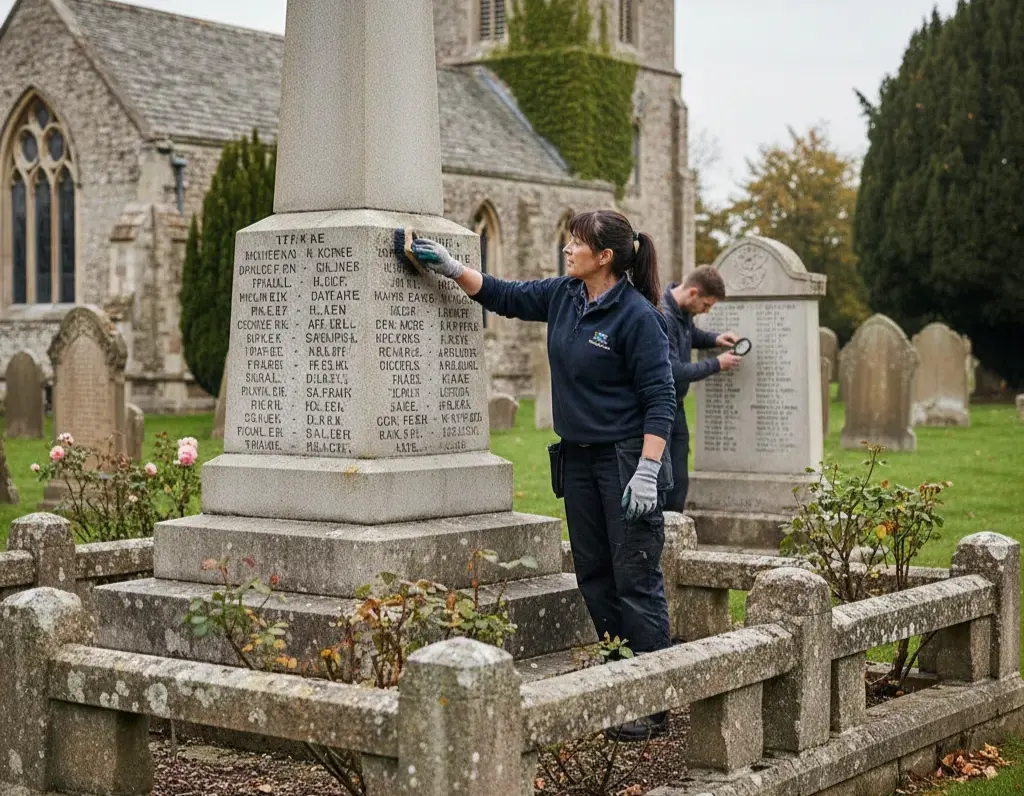
Maintaining war memorials is a solemn responsibility. These monuments honour those who have served—often sacrificing their lives—and deserve to be preserved with dignity, respect, and expertise. For communities entrusted with such memorials, whether in village churchyards or town centres, it is not a simple matter of cleaning once in a while. Instead, proper, thoughtful maintenance is needed to ensure the memorial stands strong and legible for decades to come.
This guide draws on the experience of Quince Memorials, whose longstanding work in cleaning and renovating memorials—including war memorials—offers a helpful reference for what “maintaining war memorials” properly should mean.
Why Maintenance Matters
War memorials are more than stone and inscriptions. They are collective memory—reminders of sacrifice, bravery, and history. Over time, exposure to weather, pollution, and biological growth can erode these monuments: inscriptions fade, stonework becomes discoloured or unstable, and details once clear may become difficult to read. Without proper care, these tributes risk being lost or diminished.
Furthermore, many war memorials have historical or artistic value beyond their commemorative purpose. Maintaining them properly ensures that future generations can reflect on the past with clarity and reverence. According to guidance from conservation bodies, regular inspection and maintenance, especially after harsh weather, are key to preserving war memorials for the long term.
In short, maintaining war memorials is not an optional extra. It is a duty, both practical and moral, to honour the memory of those commemorated.
What Proper Maintenance Looks Like
Maintaining war memorials should involve a combination of careful cleaning, structural assessment, restoration of damaged features, and compliance with conservation best practices. Based on the services offered by Quince Memorials and widely accepted conservation guidelines, here is what proper maintenance entails:
- Gentle cleaning adapted to the material. War memorials may be made from a variety of stones—polished granite, marble, limestone, Portland stone, Nabresina and more. Each material behaves differently over time, and each requires a tailored approach to cleaning and restoration. Quince Memorials has extensive experience cleaning all types of materials.
- Repair and restoration of damaged or weathered details. Over the years, inscriptions may fade, surfaces may erode, and structural damage can develop. Repair can involve relettering, regilding, sign painting, or even rebuilding parts of the memorial. Quince Memorials offers renovation work, including lead lettering and repainting where needed.
- Assessment of stability and fixings. Especially for older memorials, it is important to maintain a regular check to know whether the stone remains stable, whether joints or fixings have deteriorated, and whether re-anchoring or re-fixing is required. Quince Memorials combines renovation with safe installation practices to meet current standards.
- Regular inspections and documentation. A maintenance plan should include periodic surveys—ideally every few years, and especially after storms or extremes of weather—to identify damage early, before more serious problems arise.
- Consideration of surroundings and setting. While the memorial itself may be the focus, the overall environment also matters: paving, paths, vegetation, fences or boundary walls, access, and site security should all be reviewed as part of routine maintenance.
When to Undertake Maintenance
Not every memorial needs restoration every year. However, certain times and conditions call for special attention:
- After prolonged exposure to harsh weather, storms, or heavy rainfall. Water can penetrate into stone, accelerate erosion, or exacerbate biological growth such as lichen or algae.
- If inscriptions become difficult to read, or if letters start to fade, chip or crack. This is especially important for memorials listing many names, where legibility preserves memory.
- Whenever there are signs of structural instability: leaning, cracks, loose stones, or damage to fixings—especially relevant for older memorials that may not have been fixed to modern standards.
- On a regular cycle, it is wise to inspect memorials at least every few years, and ideally carry out a more thorough survey every five years. This helps catch problems early, before they worsen. Conservation guidance recommends periodic condition surveys and scheduled maintenance.
- When surroundings become overgrown, or when vegetation, paving, boundary walls, or access paths start to deteriorate. The setting of the memorial contributes to its dignity, safety and accessibility.
Suggested read: War Memorials: A Guide to Styles, Materials and Conservation
Frequently Asked Questions
What kinds of materials can be safely cleaned and restored when maintaining war memorials?
Quince Memorials works with a wide variety of materials: polished granite, marble, Portland stone, Nabresina, limestone, and rustic granite. Each material requires different care, but their team has experience across all these types, so they can choose the cleaning and renovation method best suited to each memorial.
Will cleaning or restoration harm the memorial?
Not if it is done properly. The aim is to retain as much of the original design and material as possible, in keeping with accepted conservation ethics.
How often should a war memorial be inspected or cleaned?
There is no one-size-fits-all answer. However, conservation guidance suggests periodic condition surveys, ideally every few years, with a more thorough inspection every five years. Additional inspections should follow severe weather or storms.
A Thoughtful Approach for the Long Term
Maintaining war memorials is an act of respect—not just to those who served, but to the generations who come after. It is a commitment to memory, history, and dignity. Quince Memorials offers a thoughtful, professional approach: they assess each memorial individually, choose appropriate materials and methods, and combine craftsmanship with sensitivity.
By treating each war memorial not merely as stone, but as memory embodied, communities uphold not only a physical monument, but the legacy those monuments exist to preserve. In that sense, maintaining war memorials is not only practical. It is a duty, a commitment, and a gesture of deep respect.
If you need help in maintaining the war memorial of your loved one, our team is always ready to help. Contact our expert team by calling us at 01767 314419 or by messaging us at sales@quincememorials.co.uk.